
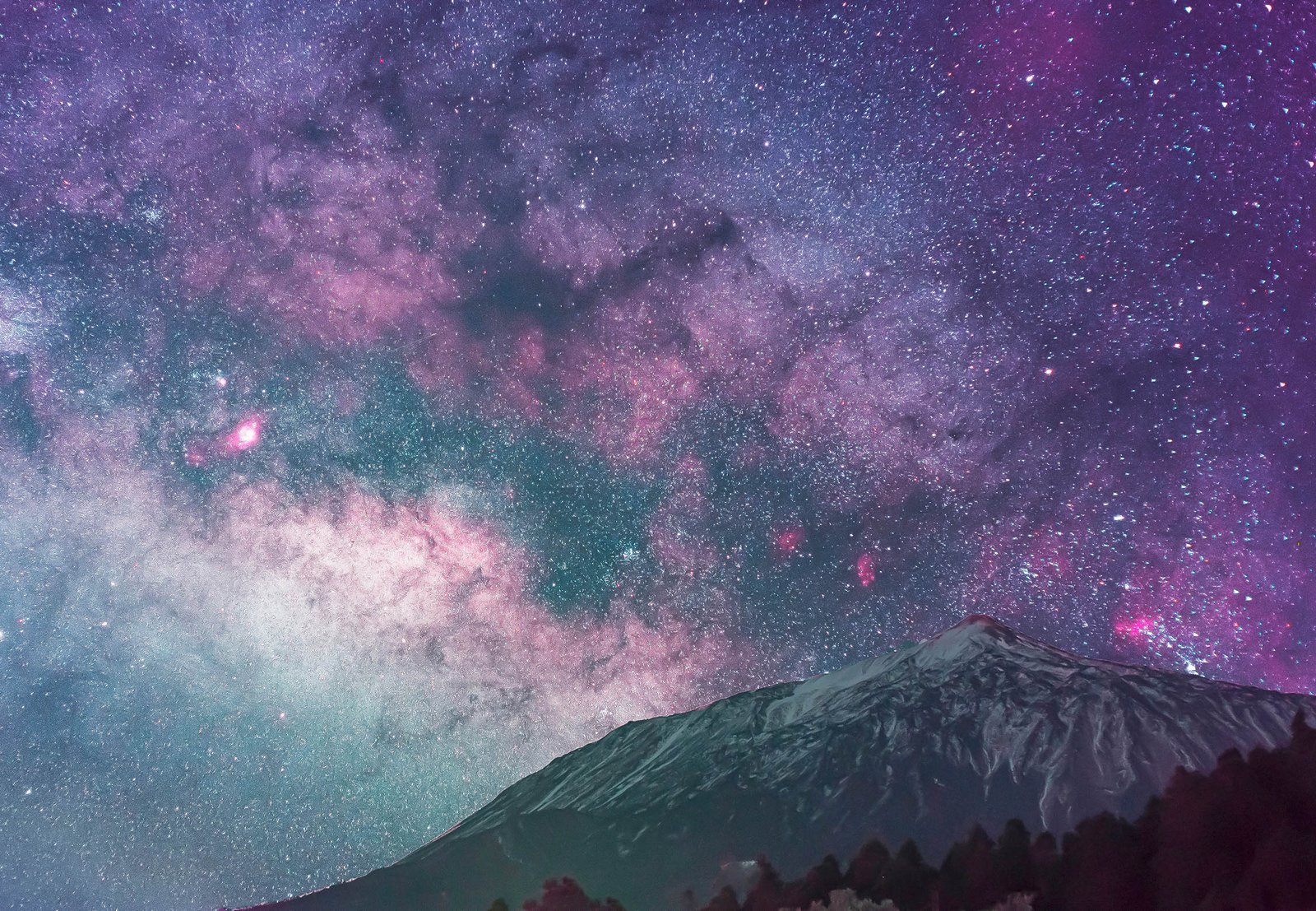
From Tenerife, the galactic core is clearly visible in spring and summer, rising low in the East (south), glowing with dense star clouds and dark dust lanes. In this article we offer some tips and insights into photographing the Milky Way in Tenerife, one of the best dark sky locations for shooting the night sky.
As the sun dips, the temperature drops fast. At 2200 m, even in summer, you’ll want layers. Then it happens. The sky darkens—not gradually, but deeply. Within an hour, the Milky Way becomes visible to the naked eye, stretching from horizon to horizon. No guessing, no squinting; it’s just there.
Photographing the Milky Way
Gear setup:
- Full-frame camera + fast wide lens (e.g. 14–24mm f/2.8)
- Star tracker for longer exposures
- Tripod anchored against volcanic wind
A typical night might look like this:
Shooting approach:
- Foreground exposure (lower ISO, longer exposure)
- Sky exposure (tracked, multiple stacked frames)
- Optional panorama for full Milky Way arch
With skies this dark, you can push:
- ISO 3200–6400
- 10–30 second exposures (untracked)
- Minutes-long tracked shots
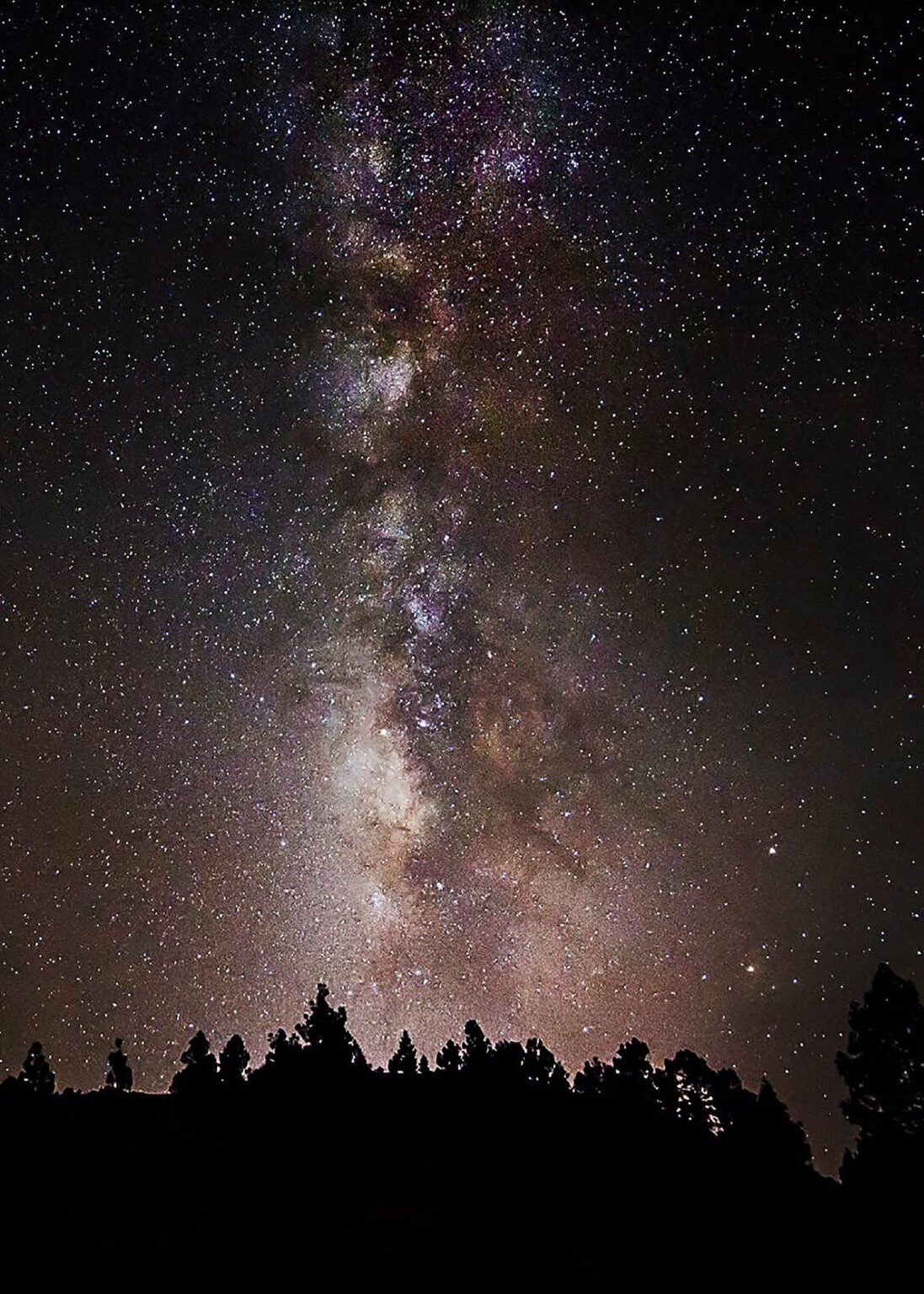
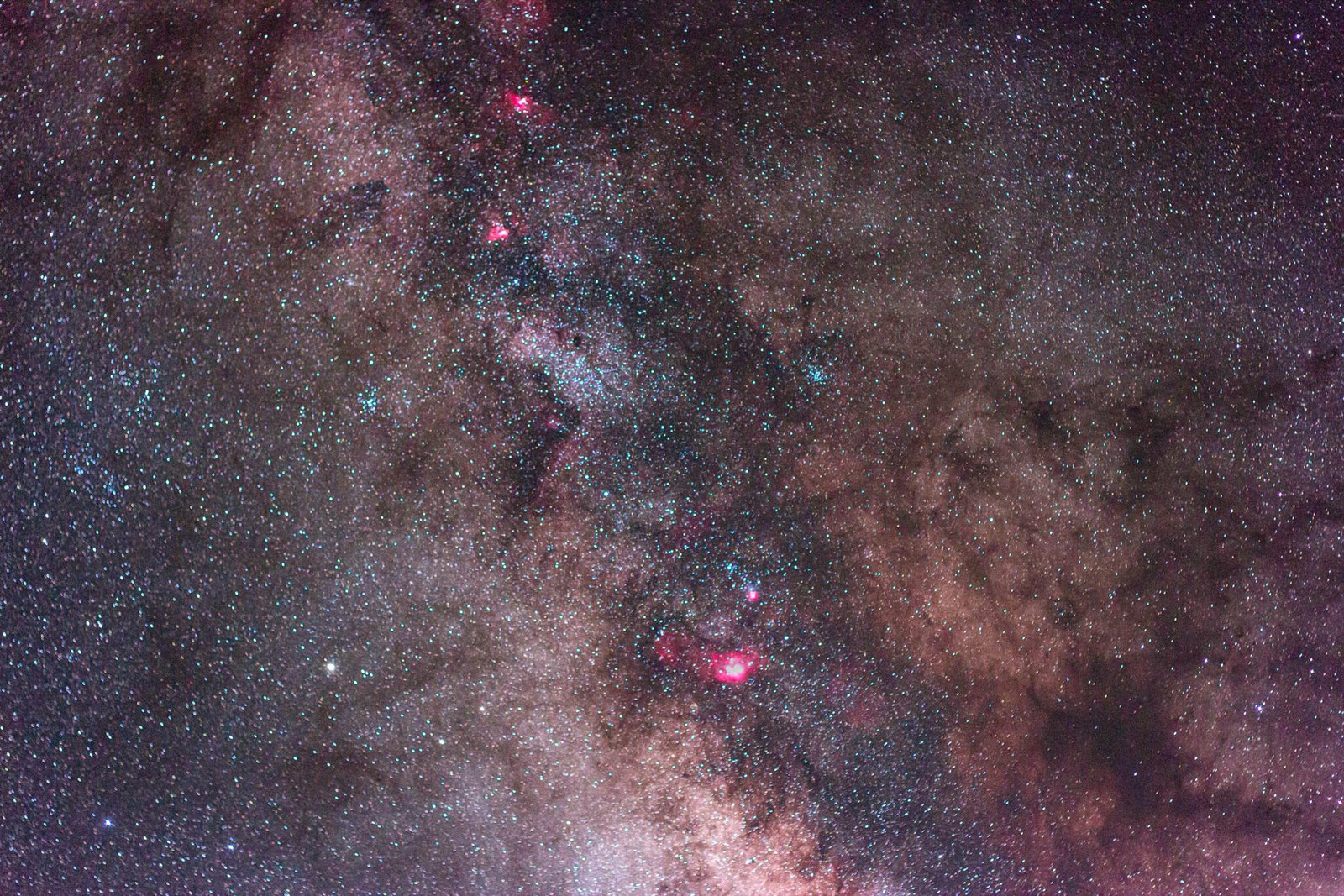
And the results? Dense star fields, rich nebula structure, and natural contrast that’s hard to replicate anywhere else in Europe.
The magic of being above the clouds
One of Tenerife’s biggest advantages is the temperature inversion layer.
Clouds often sit below you like an ocean, especially when looking toward the coast. You’re left with:
- Crystal-clear skies above
- Light pollution blocked below
It’s not unusual to shoot the Milky Way while standing above a glowing blanket of clouds—a surreal, almost dreamlike scene.
A visit to the Teide Observatory
No trip is complete without passing by the Teide Observatory, one of the world’s leading solar observatories.
While most of the serious research happens during the day, the presence of such a facility tells you everything you need to know about the quality of the skies here.
Lessons from the trip
After a week of shooting, a few things become clear:
- Altitude matters more than you think
- The difference at 2200 m is dramatic—less atmosphere, sharper stars
- Dark skies change everything
- You spend less time fighting noise, more time composing
- Wind and cold are real challenges
- Stability becomes just as important as optics
- Planning beats luck
- Knowing moon phases, Milky Way position, and weather windows is key
The final shot
On the last night, you find a quiet spot—no cars, no people, just volcanic silence. The Milky Way arches overhead, perfectly aligned with a jagged rock formation.
You take the shot.
And for a moment, you forget about settings, stacking, or post-processing. You just stand there, looking up.
Final thoughts
An astrophotography holiday in Tenerife isn’t just about getting better images (though you will). It’s about experiencing a sky that most of Europe has lost.
If you’re serious about imaging the Milky Way—but don’t want to travel to Chile or Namibia—this is as close as it gets.