
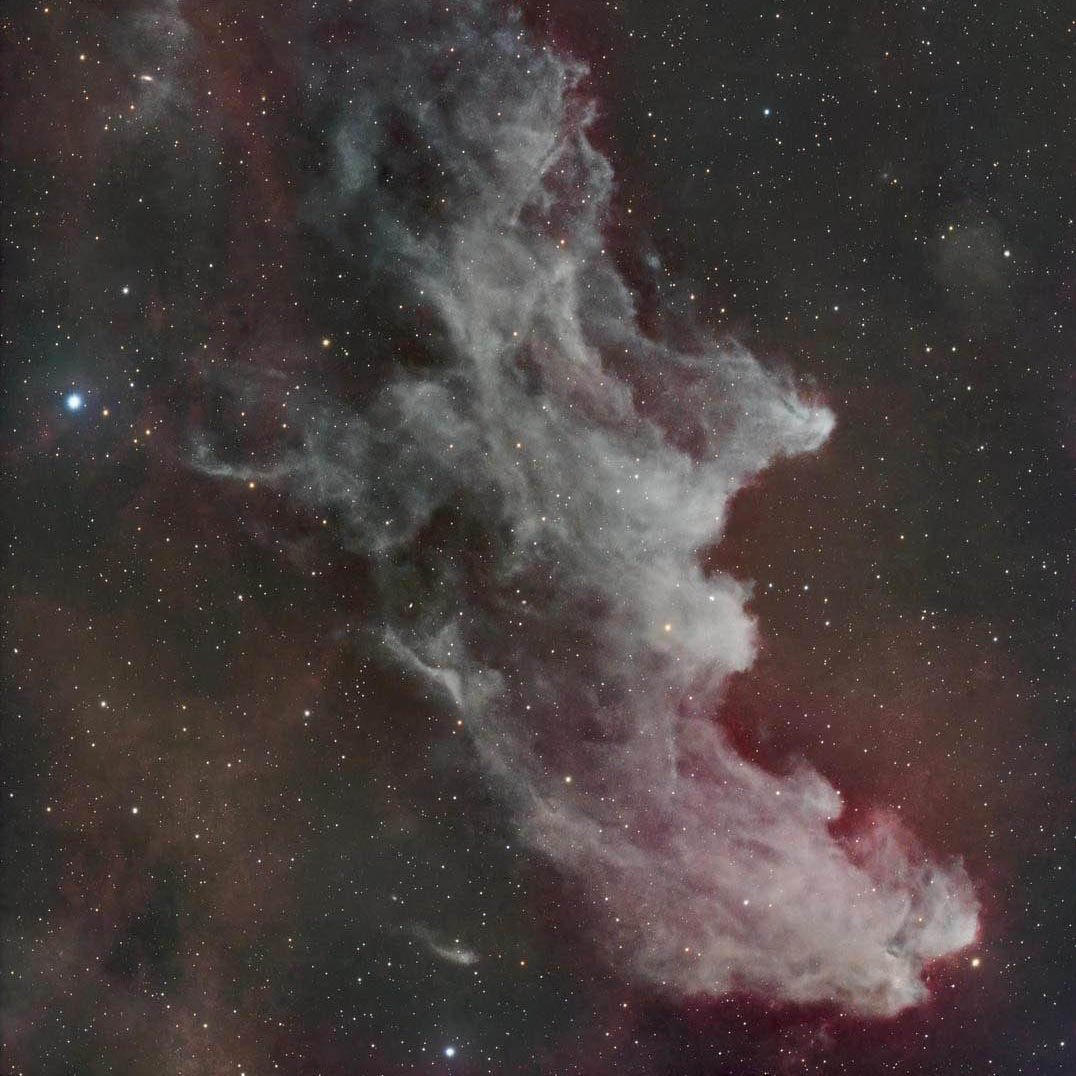
Some objects in the night sky demand attention with bright colors and bold structure. Others, like the Witch Head Nebula, whisper instead of shout—revealing their beauty only to those willing to seek them out. For astrophotographers, this faint and mysterious nebula is both a challenge and a deeply rewarding pursuit.
A Nebula Shaped by Light
The Witch Head Nebula (IC 2118) is a reflection nebula located in the constellation Eridanus, about 900 light-years from Earth. Its eerie name comes from its unmistakable silhouette—a profile that resembles a witch’s face gazing across the cosmos.
Unlike emission nebulae that glow from ionized gas, the Witch Head shines by reflecting the light of a nearby bright star: Rigel, one of the most luminous stars in the night sky. This reflected starlight gives the nebula its soft blue hue, similar to the color of Earth’s daytime sky.
Why It’s a True Astrophotography Challenge
The Witch Head Nebula is not an easy target:
- Extremely Faint: Its surface brightness is very low
- Subtle Contrast: Details blend gently into the background sky
- Large Size: Requires wide-field framing
- Sensitive to Conditions: Light pollution and moonlight can easily wash it out
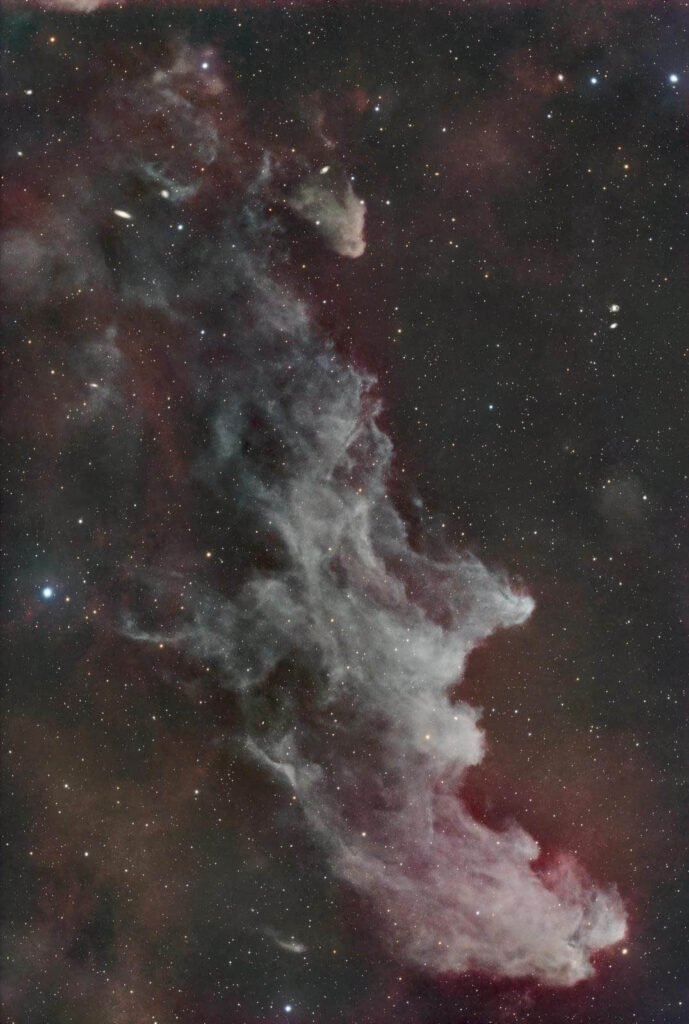
But that’s exactly what makes it so appealing. Capturing it successfully feels like uncovering a hidden secret.
Planning Your Photography Session
Timing and location are critical:
- Best Season: Late autumn through winter.
- Moon Phase: Strictly shoot during new moon or moonless nights.
- Sky Quality: Dark skies are almost essential for good results.
- Target Position: Image when it’s highest above the horizon.
- Because of its faintness, even small improvements in sky conditions can make a huge difference.
Ideal Equipment Setup
To capture the Witch Head Nebula effectively:
- Lens/Telescope: Wide-field setup (135mm–300mm) to frame the entire structure
- Camera: DSLR, mirrorless, or cooled astro camera
- Mount: Accurate tracking mount for long exposures
- Filters: Generally not needed—this is a broadband target
- Fast optics (low f-number) are especially helpful here, allowing you to gather more light in less time.
Exposure Strategy
Patience is everything with this target:
- Sub-exposures: 120–300 seconds
- ISO/Gain: ISO 800–1600 (or equivalent)
- Total Integration: Aim for 4–10+ hours
The more data you collect, the more the nebula will emerge from the background noise. Short sessions simply won’t do it justice.
Processing: Revealing the Invisible
Processing the Witch Head Nebula requires a gentle touch:
- Stack your images to build signal
- Carefully stretch the data to avoid blowing out faint التفاصيل
- Enhance contrast subtly—overprocessing can destroy the delicate structure
- Preserve natural color to maintain its soft blue reflection
- Noise reduction is especially important, but it must be balanced to avoid losing fine detail.
Common Pitfalls
- Underexposure: Not enough total integration time
- Overprocessing: Creating artificial contrast or harsh edges
- Poor Sky Conditions: Even mild light pollution can obscure the nebula
- Framing Issues: Missing the full “profile” shape
- Success comes from restraint and attention to detail.
Final Thoughts
The Witch Head Nebula is not about bold colors or instant gratification. It’s about subtlety, patience, and the quiet satisfaction of capturing something that many never see.
When you finally process your data and that ghostly blue silhouette appears, it feels almost magical—like uncovering a hidden figure in the darkness of space.
So if you’re looking for a challenge that will push your astrophotography skills further, point your lens toward Eridanus and chase the faint glow of the Witch Head.